

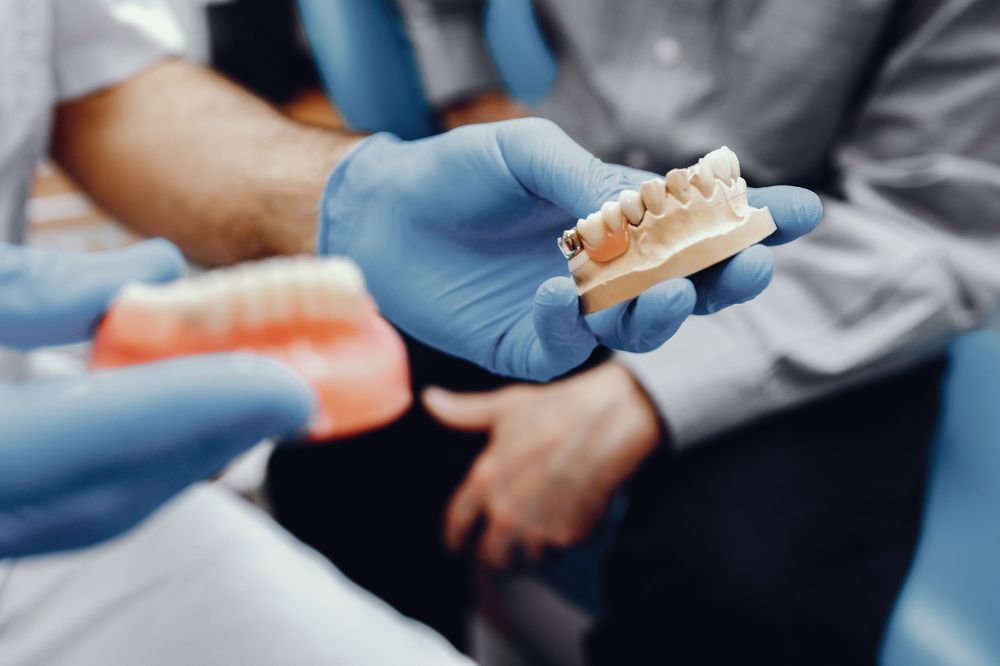
Dentists check how much bone you have in your jaw before they plan implant-supported dentures. Implants need enough bone to hold them steady. Your dentist uses an exam, X-rays, and sometimes a 3D scan. If there is not enough bone, a few extra steps can help. If you are looking into implant-supported dentures in Calgary, this check is one of the first and most important steps.
Why Your Jawbone Matters
Bone Holds the Implant
Implants are small posts placed into your jawbone. They work like roots for the teeth on top. Over time, the bone grows around the post and holds it firmly. Without enough bone, the post may not stay steady.
Bone Shrinks When Teeth Are Missing
When a tooth is lost, the bone under it slowly gets smaller. Chewing helps keep bone strong. Many people who have worn dentures for years notice their jaw has become thinner. This is why dentists check the bone carefully instead of guessing if implant-supported dentures near you are a good fit for you or not.
The Tools Dentists Use
A Simple Exam
The dentist looks at your gums and gently feels your jaw. They check how wide and tall the ridge is where your teeth used to be. This step is quick and does not cost extra.
X-Rays
X-rays show the bone as a flat picture. They help the dentist see the general shape and height of your jaw. They also show nerves and the air spaces above your upper teeth, so the dentist can plan around them.
3D Scans
A 3D scan gives a full view of your bone. It shows how wide, tall, and deep the bone is. Many clinics use this scan to choose the best spot for each implant. Some people search for a denture clinic near you that offers this service.
3D CBCT Scans
Unlike standard X-rays, which represent an object in a flat, two-dimensional view, Cone Beam Computed Tomography (CBCT) scans give the dental team a complete three-dimensional picture of the jawbone. It takes mere seconds for a CBCT scan to measure and determine the height, width and density of your bone accurately, in millimetres. These include important anatomical structures, including nerve pathways and sinus cavities, enabling your denturist to pinpoint exact implant placement. With advanced imaging, it does not guess about the treatment. Implant-supported dentures will have the strongest possible foundation, which assures long-term stability and comfort.
What Dentists Look For
Dentists usually check for four main things:
- Height: Is there an adequate amount of bone available between the gum and nerve?
- Width: Is the bone sufficiently wide to support an implant safely?
- Firmness: Is the bone strong and healthy?
- Gum health: Are your gums free from infection?
If one of these is not quite right, the plan may need to change.
What Happens If Bone Is Low
If your scan reveals low bone density or a thin jawbone ridge, it doesn’t automatically mean you can’t get implant-supported dentures. Your dental provider has several effective solutions to build or adapt to your existing bone:
- Bone Grafting: Your jaw will fill in with natural or synthetic bone material over a few months to help your bone develop strength so you can place an implant.
- Sinus Lifts: In the upper jaw, elevating the sinus and inserting bone beneath provides the space that an implant needs.
- Specialized Implants: Thinner, mini implants, strategic implants placed at an angle (including All-on-4 implants) can often use your existing bone to create a foundation for your new teeth.
Other choices may include shorter implants or a different angle for placing them. A denturist in Calgary or your dentist can explain which choice fits your mouth best. Every mouth is different, so the right plan depends on you.
Your Next Step: Visit North East Denture Clinic
Your jaw conditions are the first thing to know when you plan implant-supported dentures. An honest and straightforward test can inform you of your exact position and the choices available. North East Denture Clinic is here to support you each step of the way. Our staff provides any explanations you need for the tests, answers all of your questions, and will design a plan based on your unique needs. Contact North East Denture Clinic online to book a consultation.
Questions People Often Ask
Q: Does the bone check hurt?
Not at all. The dental exams and scans are relatively quick and painless.
Q: Can lost bone grow back by itself?
Not normally. That’s why it is better to test your jaw early.
Q: Will I always need a bone graft?
No, several people do have sufficient bone and thus forego this stage.
Q: How long does planning take?
It depends on the tests you require. It takes many clinics a few visits to complete planning.